


No.36, Fada Road, Taicang, Jiangsu
Views: 0 Author: Site Editor Publish Time: 2026-07-27 Origin: Site


Adding an extra sleeping quarter to your rig seems straightforward at first glance. However, modifying a factory chassis requires precise engineering. It is never a simple, universal modification. The structural demands shift dramatically between a campervan's factory steel roof and a larger motorhome's fabricated box chassis. Buyers and upfitters must align these designs carefully. They need to respect the vehicle’s Gross Vehicle Weight Rating limits. You must also evaluate roof material compatibility, such as fiberglass versus TPO membranes. Furthermore, builders must account for intended environmental exposure during off-grid travel.
This guide provides an evidence-based comparison of poptop integrations across motorhome classes. We will explore structural evaluations, material differences, and mechanical lifting systems. You will learn how to specify the right setup for your exact vehicle. Ultimately, this ensures safe procurement and robust structural evaluation.
Structural limitations dictate design: Class B poptops rely on the OEM van chassis for rigidity, while Class C installations must account for the structural integrity of composite or TPO/fiberglass box roofs.
Mechanism selection defines longevity: Evaluating lifting systems requires looking beyond payload to environmental ratings, specifically prioritizing an IP67 Waterproof Vertical Lifting Mechanism for RVs in four-season builds.
Weight vs. Utility trade-offs: Every RV poptop roof for motorhomes subtracts from the overall payload capacity; precise cost-benefit analysis of the added sleeping footprint is necessary before final specification.
You cannot modify a vehicle safely without understanding its base structure. Engineers must establish a clear baseline of existing roof support. They do this before initiating any modification. A successful RV Poptop Roof installation relies on this baseline data.
Establish strict success criteria before cutting into a chassis. You must verify structural load limits. Builders must consult OEM bodybuilder guidelines. These guidelines dictate where you can safely remove material. Ignoring them compromises vehicle safety. The goal is zero structural deflection under maximum payload.
Class B motorhomes present unique structural challenges. They use a steel-body construction. Modifying them requires cutting the original equipment manufacturer (OEM) roof. Builders must then add a reinforcing structural frame. This frame replaces the lost rigidity.
Aerodynamic constraints play a massive role here. You must match the roof contours perfectly. Vehicles like the Sprinter, Transit, and Promaster feature distinct roof ribbing. A flat poptop frame will not seal against a ribbed steel roof. You need custom molding to bridge this gap. Failure to contour leads to severe wind noise. It also guarantees water ingress at highway speeds.
Class C motorhomes utilize a completely different architecture. They feature flat-roof construction. Manufacturers build these boxes using composite panels, fiberglass, or TPO membranes. These materials behave differently under stress.
Load-bearing limitations define Class C modifications. Builders must assess the cross-member spacing of the "box." You must ensure the poptop frame aligns with these hidden supports. If the frame misses the cross-members, the roof will sag over time. This sagging compromises the entire coach structure.
Structural Architecture Reference Summary
Framework Type | Primary Material | Core Engineering Challenge | Reinforcement Strategy |
|---|---|---|---|
Class B (Campervan) | Stamped Steel | Contour matching & aerodynamics | Internal steel halo frame |
Class C (Cab-over Box) | Fiberglass / TPO | Load distribution & cross-member alignment | External spreader plates & bonding |
Van conversions require extreme precision. You face a distinct problem framing here. Builders want to maximize interior standing height. They also want to increase sleeping capacity. However, they must do this within a confined, aerodynamic footprint.
You must evaluate several crucial dimensions before installation. The most critical factor is weight distribution. Cutting the steel roof alters the vehicle's center of gravity. A heavy poptop raises this center significantly. This shift increases roll-over risk during sudden maneuvers. Engineers calculate these shifts carefully.
Sealant and contouring demand equal attention. Vans are not flat boxes. They curve aggressively. This curvature requires custom-molded fiberglass cowlings. These cowlings transition the flat poptop frame into the curved van body. They prevent wind noise. They also stop water ingress along the seams.
Modifying a Class B van carries severe implementation risks. Cutting OEM cross-members is dangerous. It can void chassis warranties instantly. You must use manufacturer-approved bracing systems. Common mistakes include:
Skipping internal halo reinforcements to save time.
Using standard silicone instead of automotive-grade polyurethane adhesives.
Ignoring the front wind fairing, leading to aerodynamic drag.
Failing to rust-proof the cut steel edges before frame installation.
Class C integration presents the opposite challenge of a Class B van. Here, the problem framing centers on material strength. You must safely integrate a heavy poptop structure into a relatively lightweight, fabricated roof. A poorly engineered RV Poptop Roof for Motorhomes can crush a composite box.
Material compatibility is your primary evaluation dimension. TPO membranes differ vastly from fiberglass substrates. TPO is essentially a rubberized sheet. It requires specialized mechanical fastening. Builders must seal it properly. This prevents membrane tearing under the poptop's lifting stress. Conversely, fiberglass offers a more rigid mounting substrate. It handles structural bonding adhesives much better than TPO.
Roof estate management creates another major hurdle. Class C roofs are crowded. You must balance the footprint of the poptop with essential components. Air conditioning units, solar arrays, and Starlink flat mounts compete for space. You must plan the layout meticulously. Moving an A/C unit requires rerouting ductwork and electrical lines.
Flat roofs invite water pooling. This is a severe implementation risk. Water pools around the flat-roof mounting flange. Stagnant water degrades seals over time. It eventually finds a way inside. Builders must engineer drainage channels around the flange. Weeping holes prevent water buildup during heavy storms.
Inspect the existing roof membrane for delamination.
Locate aluminum cross-members using a density scanner.
Design an aluminum sub-frame to span at least three cross-members.
Install integrated drainage channels along the perimeter flange.
Lifting a heavy roof requires robust mechanics. We must compare the mechanical frameworks raising and lowering the roof under load. These solution categories define user experience and reliability.
Most basic poptops use traditional scissor hinges paired with gas struts. They hinge at one end and lift at the other. This creates a wedge-shaped profile.
Pros of this system include lower initial costs. They also offer a simple manual override. If a strut fails, you can physically push the roof up.
Cons are significant. The wedge shape creates uneven height distribution. Your feet get cramped at the hinge end. Furthermore, they are highly susceptible to wind deflection. A strong crosswind can collapse a weak strut. Finally, gas struts fail frequently in sub-zero temperatures. Cold weather reduces internal gas pressure drastically.
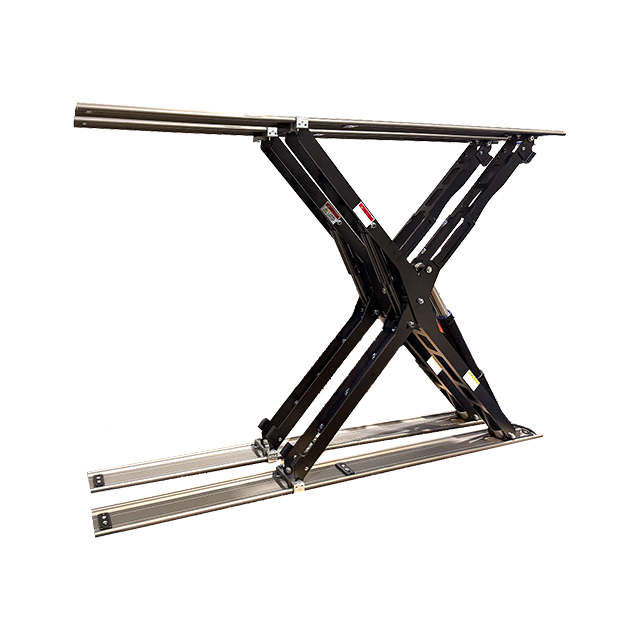
Modern builds demand better engineering. This brings us to linear actuation. Let us evaluate the features-to-outcomes of these advanced systems. A 100% vertical lift provides uniform interior height. You can stand anywhere inside the tent. Furthermore, you must prioritize ingress protection. An IP67 Waterproof Vertical Lifting Mechanism for RVs ensures actuators remain completely protected against dust. It also stops high-pressure water ingress. This is crucial for driving in heavy rain.
Load capacity sets vertical mechanisms apart. Motorhome roofs carry gear. These electronic systems lift roofs heavily loaded with solar panels. They easily handle roof racks without manual assistance. You do not need to strain your back.
Implementation considerations require careful electrical planning. These actuators draw significant amperage. They require electrical integration into the 12V or 48V house battery system. You must wire them with appropriate gauge cables. Additionally, a manual override fail-safe is mandatory. You must have a way to lower the roof during a total battery failure.
Mechanism Actuation Comparison Chart
Mechanism Type | Lift Profile | Weather Resistance | Load Capacity Factor | Power Source |
|---|---|---|---|---|
Gas Strut & Scissor | Wedge / Angled | Moderate (Susceptible to cold) | Low (Manual assist needed) | Human kinetic energy |
IP67 Vertical Actuator | 100% Flat / Uniform | Excellent (Dust & water tight) | High (Lifts solar & racks) | 12V/48V Electrical System |
Off-grid camping exposes your vehicle to harsh elements. The problem framing here is thermal dynamic alteration. You are fundamentally replacing a solid, insulated ceiling with fabric. This changes how the motorhome retains heat and cold.
You cannot use standard tent material for four-season builds. Tent material specifications matter immensely. Builders often choose between acrylic and poly-cotton blends. Acrylic resists UV degradation better. Poly-cotton breathes better, reducing condensation. You must evaluate hydrostatic head ratings carefully. Look for ratings above 2000mm. This metric proves true waterproof claims against driving rain.
Thermal breaks distinguish premium builds from amateur ones. Heat rises and escapes through the roof opening. You need availability of quilted insulation liners. These attach inside the canvas. Additionally, you need rigid thermal covers for the ceiling opening. You close these covers when the poptop is down. They prevent HVAC loss into the uninsulated tent space during normal transit.
Buyers must remain objective. Avoid manufacturers claiming "all-weather comfort" without providing data. Demand verifiable R-values for their closed-state roof structure. Ask for thermal liner specifications. If they cannot produce laboratory testing data, look elsewhere. Poor insulation ruins off-grid experiences.
Choosing the right poptop requires rigorous structural and mechanical analysis. Buyers must match the architecture to their specific chassis platform.
For Class B upfits, prioritize aerodynamic contouring. You must use OEM-approved structural reinforcement. Wedge-style designs maintain vehicle agility and keep weight low. For Class C applications, prioritize load distribution across flat surfaces. Sealing integrity is paramount. Opt for an electronic vertical lifting mechanism to handle heavier payloads safely.
First, audit your vehicle’s remaining payload capacity. You must know your exact limits. Second, measure your available roof real estate. Account for every solar panel and A/C unit. Finally, request structural reinforcement diagrams from poptop manufacturers. Do this before making any procurement decisions.
A: Yes, but it requires substantial evaluation of the existing roof substrate. You must determine if it uses fiberglass, rubber, or TPO. You also need to map the structural cross-members. Retrofits are highly complex. They often require custom load-distribution framing to prevent the roof box from collapsing under the new weight.
A: It typically adds between 150 lbs to 350 lbs. This depends on the mechanism type. Manual struts weigh less than heavy-duty electronic actuators. Bed platform materials also factor in. You must subtract this exact weight from the vehicle's Occupant and Cargo Carrying Capacity (OCCC) to remain legally and structurally safe.
A: Yes, provided they meet strict industrial ingress standards. An IP67 waterproof rating ensures dust and heavy rain will not short the internal actuators. However, reliability requires redundancy. You must verify a mechanical override exists prior to purchase. This allows you to close the roof during a total house battery failure.


