


No.36, Fada Road, Taicang, Jiangsu
Views: 0 Author: Site Editor Publish Time: 2026-07-09 Origin: Site


Expanding your living space upward brings unmatched freedom to modern travel. However, the spatial benefits of an RV Poptop Roof frequently come with a severe acoustic penalty. Highway wind whistle and structural lift noise can easily ruin the driving experience.
Many owners rely on aftermarket acoustic panels and basic weather seals for relief. While these options offer incremental improvements, true noise control demands more. You must address both aerodynamic drag and the rigidity of the mechanical lifting system. Covering up the sound rarely solves the underlying structural issues causing it.
This article provides a technical evaluation framework for diagnosing poptop noise sources. We will help you assess structural versus superficial fixes for your vehicle. Finally, we will evaluate advanced hardware upgrades designed to eliminate mechanical sway. By pinpointing exact failure points, you can make informed decisions to achieve a truly quiet cabin.
Identify the Source: Differentiate between aerodynamic noise (wind whistle/shear) and mechanical noise (rattling hinges, loose lift mechanisms).
Superficial vs. Structural: Weatherstripping and vent deflectors are cost-effective first steps, but fail to resolve vibration caused by weak lifting hardware.
Mechanism Matters: Vertical lift architectures inherently reduce transit vibrations compared to standard scissor-lift mechanisms.
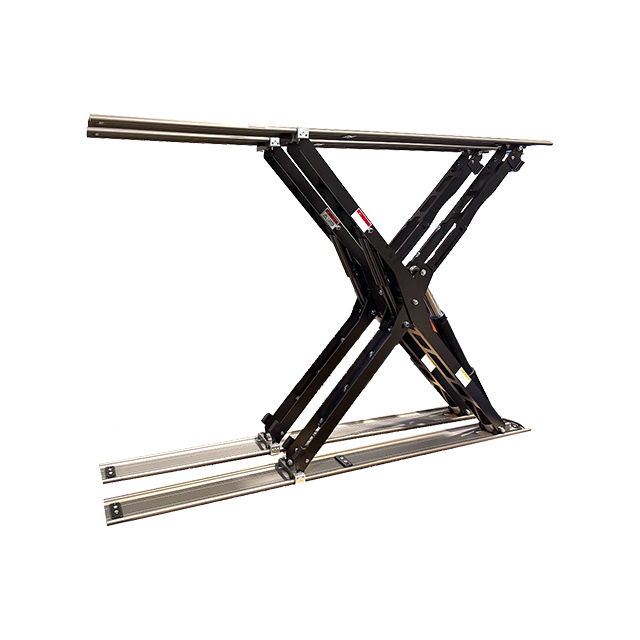
Hardware Evaluation: Upgrading to engineered systems like the Dongtai Self-Developed Vertical Lifting Mechanism-Tzqt4747 addresses the root cause of mechanical sway and rattle at highway speeds.
Aerodynamic shear occurs when air forces its way through tiny crevices. As your vehicle accelerates past 55 mph, air pressure builds heavily against the front edge of the roof shell. Gaps between the poptop shell and the main RV roof create high-pressure air channels. Air rushing through these small channels produces a high-pitched whistling sound.
To evaluate this issue, inspect the integrity of your OEM rubber gaskets. Look for flat spots, tears, or dry rot. You should also assess any front-facing wind deflectors. If the deflector sits at an incorrect angle, it might direct turbulent air straight into the roof seal rather than over it.
Mechanical vibration presents a completely different acoustic profile. It usually sounds like a low rumble, clatter, or metallic clinking. Standard hinges and gas struts fatigue over time. Constant road vibration weakens them. This fatigue allows the fiberglass or aluminum roof to micro-vibrate against the chassis during transit.
As components loosen, they lose their ability to hold the roof tightly against the vehicle frame. Even a few millimeters of play in a worn scissor hinge can translate into violent shaking at highway speeds. This persistent rattling creates deep, structurally transmitted noise.
A thin poptop shell acts much like a drum. It features a large, flat surface area made of relatively lightweight materials. This surface catches vibrations and amplifies them. It amplifies general road noise, tire hum, and roof-vent turbulence directly into the cabin.
When wind hits the shell, the entire structure resonates. This resonance bounces sound waves around the interior of your van. Differentiating this booming resonance from mechanical rattling is crucial. Resonance requires dampening, while mechanical rattling requires hardware stabilization.
Applying butyl-based constrained layer dampening (CLD) to the poptop ceiling is a popular fix. CLD mats add mass to the thin shell. This mass lowers the resonant frequency of the material. When the resonant frequency drops, the "drum" effect decreases significantly.
However, this approach has strict limitations. Heavy rubber mats add considerable weight to the roof. This extra weight pushes your gas struts closer to their maximum payload limit. If you overload the struts, they will fail prematurely. Furthermore, insulation does not stop the noise at the source. It merely absorbs some of the sound waves before they reach your ears.
Factory D-seals often compress and lose their memory. Replacing them with closed-cell EPDM rubber offers a robust solution for sealing gaps. EPDM rubber repels water and regains its shape well after compression. Adding aerodynamic vent covers also helps smooth airflow over rooftop accessories.
These surface-level fixes are highly effective for pure wind whistle. By closing off air channels, you immediately stop aerodynamic shear. However, EPDM seals are highly susceptible to UV degradation. Constant sun exposure bakes the rubber, turning it brittle. You will likely require bi-annual replacement to maintain a perfectly quiet seal.
Acoustic Fixes Comparison Chart
Fix Type | Primary Target | Effectiveness | Common Limitations |
|---|---|---|---|
CLD Deadening Mats | Resonance / Drumming | Moderate | Adds significant weight; stresses struts. |
EPDM Weather Seals | Wind Whistle / Shear | High | Requires frequent replacement due to UV wear. |
Wind Deflectors | Turbulent Airflow | Moderate | Does not fix mechanical rattling. |
Addressing gaps and replacing seals is ultimately futile if the mechanical lift allows lateral movement during travel. Imagine replacing a door seal without fixing a broken door latch. The door will still rattle. The same logic applies to your roof. If the lifting hardware shifts under aerodynamic pressure, it pulls the roof away from the fresh seals. This immediately reintroduces highway wind noise.
Understanding load distribution highlights why some roofs rattle while others stay quiet.
Angled Scissor Lifts: These mechanisms push up from an angle. They often suffer from asymmetric tension. Over time, the uneven stress leads to squeaking hinges. It also causes uneven seal compression. One side of the roof might seal perfectly, while the other side gaps open.
Vertical Lift Mechanisms: Vertical systems push straight up and pull straight down. They offer unified, 4-point compression. This locks the roof tightly and evenly against the primary gasket. By applying equal downward force, vertical lifts eliminate the micro-vibrations commonly associated with scissor hinges.
Heavy-duty locking mechanisms do more than just lower noise. They prevent the roof from lifting under high aerodynamic pressure. Sudden gusts from passing semi-trucks can create an upward vacuum effect on the roof. If the lifting hardware lacks rigidity, the roof flutters. This flutter is a major source of sudden, explosive wind noise. Structurally rigid hardware acts as an anchor, ensuring acoustic stability and driving safety.
Evaluating advanced hardware reveals stark differences in structural rigidity. Traditional aftermarket lift kits often rely on simple gas struts and thin metal brackets. In contrast, the Dongtai Self-Developed Vertical Lifting Mechanism-Tzqt4747 utilizes a heavily engineered architecture. It integrates precision motor control components into a robust vertical frame. This unified design inherently resists lateral sway much better than disjointed aftermarket kits.
Precision manufacturing directly impacts RV Poptop Roof Noise. The Tzqt4747 features tightly engineered tolerances. When you lock it into the travel position, there is no slack in the joints. This exact fit prevents metal-on-metal rattling. By eliminating mechanical play, the system stops vibrations from traveling down into the van chassis. You experience a smoother, quieter ride regardless of road conditions.
A quiet roof requires consistent pressure on the weather seals. The synchronized vertical lift of the Dongtai Tzqt4747 ensures an airtight, 360-degree seal upon closure. Because the mechanism pulls the roof straight down, it compresses the gasket uniformly. It actively eliminates the tiny corner gaps that cause highway wind whistle. You never have to worry about asymmetric closing forces.
It is important to acknowledge implementation realities. Upgrading your entire lifting mechanism requires upfront investment and professional integration. You must align the motorized components accurately. Because of this complexity, the Tzqt4747 is best suited for premium retrofits or new custom builds. It is not a quick weekend project, but it offers a permanent structural solution.
Your current build stage dictates your best course of action. You must align your troubleshooting strategy with your capabilities.
Retrofitters: Start with the least invasive options. Replace worn seals and install roof-vent deflectors. Take the vehicle on the highway. If a mechanical rattle persists after fixing aerodynamics, you must inspect your struts and hinges for lateral play.
New Builders / Premium Upgrades: Base your entire build on a rigid vertical lifting system like the Dongtai Tzqt4747. Engineer out structural noise from day one. Do not settle for angled scissor lifts if you value acoustic comfort.
Be very cautious when applying sound deadening materials. We strongly warn against over-insulating the roof shell with heavy mats without recalibrating the lift mechanisms. Standard gas struts are rated for a specific weight. Adding thirty pounds of butyl matting will compromise their lifting capacity. You might fix the resonance, but you will struggle to raise the roof at the campsite.
Use a clear logic tree to determine your next purchases. If the noise you hear is purely high-pitched wind, focus on aerodynamics. Buy high-quality EPDM seals and check your deflector angles. However, if the noise includes clunking, squeaking, or noticeable roof flutter, superficial fixes will fail. You must focus on mechanical replacement and upgrade to rigid locking hardware.
RV poptop roof noise is not an unsolvable byproduct of van life; it is a measurable engineering challenge.
Long-term acoustic comfort relies less on covering up noise with foam, and more on ensuring mechanical unity.
Secure the poptop tightly to the van chassis using superior vertical lifting and locking mechanisms.
Audit your current hardware carefully. Weigh the long-term return on investment of structural component upgrades against the repetitive costs of temporary fixes.
Eliminating lateral sway is the most effective way to protect your seals and guarantee a quiet highway drive.
A: Whistling at highway speeds relates directly to aerodynamic drag. As you exceed 55 mph, high-pressure air forces its way past compromised or worn rubber seals. This high-velocity air squeezing through tight gaps creates a sharp whistling sound. Upgrading to fresh closed-cell seals usually resolves this specific issue.
A: No. Sound deadening mats only lower the resonant frequency of the roof panel, which helps reduce drumming and road rumble. They do not stop air intrusion. To eliminate wind noise, you must physically block the air channels using proper weatherstripping and deflectors.
A: Yes, especially if you experience clunking and roof flutter. Vertical mechanisms, like the Dongtai Tzqt4747, provide unified downward compression. This eliminates mechanical rattling and ensures an airtight 360-degree seal. It offers dual benefits: supreme acoustic sealing and drastically increased structural safety.
A: You should inspect seals annually. Due to harsh UV exposure and varying climates, standard rubber degrades quickly. Expect to replace your weatherstripping every two to three years to maintain optimal compression and prevent high-speed wind whistle.


