


No.36, Fada Road, Taicang, Jiangsu
Views: 0 Author: Site Editor Publish Time: 2026-08-03 Origin: Site


The transition from manual gas struts to fully automated electric lifting systems is defining the next generation of premium camper vans. It offers incredible convenience at the push of a button. However, this automation brings distinct challenges. Lowering a heavy, motorized fiberglass roof introduces severe crushing hazards for users, pets, and misplaced gear. A simple push-button operation can quickly turn into a dangerous scenario if obstructions go unnoticed.
For RV builders and upfitters, integrating a reliable Electric RV Poptop Roof requires more than just high-torque actuators. It demands verifiable anti-pinch (anti-trap) technology. You need this technology to mitigate liability and ensure safe, consistent operation. Mechanical force alone is a liability. You must pair it with intelligent safety logic. This guide explores how anti-pinch systems function, how you evaluate them, and why they remain essential for modern recreational vehicle builds.
Anti-pinch technology prevents crushing injuries by detecting obstructions and instantly reversing the actuator's travel direction.
Reliable systems rely on sophisticated current-monitoring algorithms rather than fragile exterior sensors.
Environmental durability—specifically utilizing an IP67 Waterproof Vertical Lifting Mechanism for RVs—is required to ensure safety sensors do not fail under moisture or extreme weather conditions.
Successful implementation requires careful calibration to distinguish between actual obstructions and natural resistance from stiff tent canvas or high winds.
You cannot build a modern camper van without considering the safety implications of automation. A motorized roof presents unique risks. Understanding these risks helps you build better, safer vehicles.
Mechanized roofs without safety sensors pose a massive legal risk. If a child's hand gets caught, the manufacturer faces immense financial liability. OEMs and custom builders must comply with strict vehicle safety standards. A heavy fiberglass roof exerts hundreds of pounds of downward force. When an actuator lacks pinch detection, it simply keeps pushing until the motor stalls. This oversight invites lawsuits and mandatory recalls. You mitigate these risks entirely by integrating proven anti-trap protocols into the central control box.
Many early designs relied on manual "stop" buttons. Builders expected users to watch the roof closely while lowering it. This strategy represents a massive user experience gap. It is an inadequate safety strategy for high-end recreational vehicles. Users get distracted. They might look away to check their phone or wrangle a dog. You cannot rely on human vigilance as a primary safety mechanism. Premium buyers expect the vehicle to protect them automatically. An intelligent system steps in when the user loses focus.
The camper van market is incredibly crowded. Standing out requires more than aesthetic upgrades. Verifiable safety features serve as a core differentiator. When you market a vehicle, you sell peace of mind. Customers appreciate knowing their family is safe. Demonstrating a fast-acting anti-pinch system builds deep brand trust. It proves your engineering team cares about real-world use cases. This trust translates directly into brand loyalty and positive word-of-mouth marketing.
Understanding the underlying mechanics of anti-pinch technology helps you make better purchasing decisions. It separates high-quality engineering from cheap alternatives.
Modern safety systems rarely use physical bump sensors on the roof edges. Instead, they rely on current-sensing algorithms. The system’s main control box continuously monitors electrical current flowing to the actuators. Normal operation draws a predictable amount of power.
When the roof hits an obstacle, the motor suddenly works harder. It tries to push past the barrier. This effort causes an immediate current spike. The intelligent controller detects this micro-surge instantly. It recognizes the surge as an anomaly, stops the motor, and initiates the safety protocol. This method requires no external wiring, making it highly reliable.
Some builders wonder why optical sensors are not used. Optical sensors work well in clean environments like elevator doors. They fail quickly in dusty, vibrating RV environments. Dirt, mud, or heavy rain blocks their view.
Enclosed Hall effect sensors offer a superior solution. Engineers place these magnetic sensors safely inside the sealed motor housing. They measure motor revolutions precisely. They monitor the speed and position of the actuator shaft. If the shaft slows down unexpectedly, the Hall sensor alerts the controller. They remain completely protected from the harsh exterior environment. This internal placement guarantees consistent performance over the vehicle's lifespan.
Detecting an obstruction is only the first step. The system must also react appropriately. A sudden stop is not enough. The pressure remains on the trapped object. To solve this, quality systems implement a strict reversal protocol. It frees the trapped object without any user intervention.
The automated response sequence follows these specific steps:
Detection: The controller identifies a sudden current spike or a drop in motor speed.
Immediate Halt: Power to the downward motion cuts off within milliseconds.
Direction Reversal: The system immediately reverses the motor polarity.
Retraction: The actuators raise the roof upward by 2 to 3 inches.
System Lock: The system halts and waits for the user to clear the obstruction and reset the command.
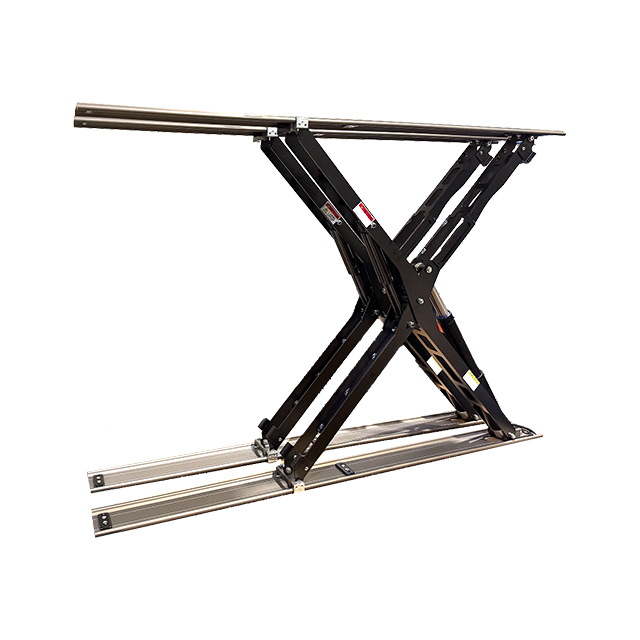
You must evaluate lift mechanisms on a systemic level. A strong motor means nothing if the control logic is flawed. Pay attention to the following engineering criteria.
Most poptop roofs require at least two, and often four, actuators. These actuators must communicate perfectly. They must move at the exact same speed. Uneven lowering causes serious structural issues. It racks the roof sideways.
When the roof tilts unevenly, the scissor hinges bind up. This binding creates mechanical resistance. The control box might misinterpret this mechanical binding as a pinch event. It triggers a false anti-pinch response, halting the roof unnecessarily. Perfect synchronization prevents these false positives. It ensures smooth, level operation and protects the costly hinge hardware from permanent damage.
You install these actuators on the exterior of a moving vehicle. They face highway-speed rain, freezing temperatures, and road salt. Evaluating the actuator housing is critical. Safety algorithms are entirely useless if the internal circuitry corrodes.
Moisture destroys delicate sensor wiring. Specifying an IP67 Waterproof Vertical Lifting Mechanism for RVs is a non-negotiable baseline for exposed roof applications. The IP67 rating ensures the unit is completely dust-tight. It also guarantees the unit can withstand temporary immersion in water. This environmental resilience protects the Hall sensors and the internal motor wiring. It guarantees the anti-pinch functionality will perform exactly when you need it.
Engineers face a difficult balancing act. The system must push through heavy crosswinds without stalling. Winds up to 30mph create significant uplift and side pressure. They force the actuators to work harder to close the roof.
The system cannot mistakenly identify this wind resistance as a "pinch" event. If the sensitivity is too high, a stiff breeze will prevent the roof from closing. The controller must feature dynamic load sensing. It filters out the gradual resistance of wind while reacting instantly to the sudden, sharp resistance of a solid object. This distinction is the hallmark of a premium control algorithm.
Installing an automated roof is rarely a plug-and-play affair. You must adapt the technology to the physical realities of the camper van environment.
Real-world testing reveals a common implementation hurdle. We call it the cold canvas problem. Tent fabric behaves differently across various temperatures. In summer, the canvas folds easily. It offers little resistance as the roof lowers.
In freezing temperatures, the heavy tent fabric becomes incredibly stiff. It bunches up awkwardly. This stiff material creates substantial mechanical resistance against the lowering roof. Overly sensitive anti-pinch systems struggle here. They hit the stiff canvas, register a false positive, and reverse. Acknowledging this implementation reality is vital. You must select controllers that account for seasonal material changes.
Engineers solve the cold canvas problem through precise calibration tolerance. They program the controller to ignore safe baseline friction. The system learns the normal resistance profile of the roof over its full stroke.
It allows for slow, gradual increases in resistance. However, it maintains rapid response times for sudden, rigid obstructions. A human hand or a misplaced camping chair creates a sharp, immediate spike in motor current. The system ignores the soft push of canvas but triggers instantly for hard objects. Proper calibration requires field testing and fine-tuning by the OEM.
Technology occasionally fails. Wires get pinched. Main vehicle batteries die. You must plan for the worst-case scenario. Integrating a fail-safe mechanical release is an absolute necessity.
If you experience total power loss, the roof cannot remain permanently stuck in the upward position. A reliable Electric RV Poptop Roof must feature a manual override mechanism. This might involve a mechanical release pin or a manual hand-crank override. This feature ensures users can secure the vehicle and drive home safely, even if the primary electronic sensors fail entirely.
Choosing the right hardware supplier determines the long-term success of your vehicle builds. You need a partner who understands specialized safety logic.
Do not accept vague safety claims. Ask vendors for documented, third-party cycle-testing data. You want to see their obstruction response times measured in milliseconds. Ask them how much force the roof exerts before the reversal protocol kicks in. Reliable manufacturers will provide testing charts showing current spikes and exact motor cutoff times. If a vendor cannot provide this data, look elsewhere.
The control box is the brain of the operation. Ensure the vendor supplies an integrated control ecosystem designed specifically for multi-actuator synchronization. Avoid vendors who suggest pairing their motors with generic, off-the-shelf relays.
Generic relays cannot monitor Hall sensor feedback accurately. They cannot execute simultaneous reversal protocols. You need a dedicated, programmable control unit that communicates with all actuators simultaneously.
Vendor Evaluation Checklist Matrix
Evaluation Criteria | Red Flag Indicator | Ideal Industry Standard |
|---|---|---|
Response Time Data | Vendor cannot provide millisecond cutoff data. | Documented sub-second response to sudden current spikes. |
Ingress Protection | Standard IP54 or unrated motor housings. | Verified IP67 rating for total waterproof and dustproof integrity. |
Controller Type | Recommends basic third-party relay setups. | Proprietary control box with active Hall-effect synchronization. |
Override Capability | No physical manual release mechanism present. | Integrated mechanical bypass for total power failure scenarios. |
Assess the vendor's warranty policy carefully. Focus on replacing units that suffer sensor failure due to water ingress or vibration over time. An actuator might work perfectly on day one but fail after six months of washboard dirt roads. Your supplier must stand behind the durability of their internal circuitry. Look for warranties that specifically cover the electronic control components, not just the mechanical gearing.
An electric camper roof is only as viable as its safety mechanisms. Anti-pinch technology bridges the crucial gap between high-end convenience and legal liability. Without it, you are installing a heavy, mechanized hazard on top of a recreational vehicle. With it, you deliver a seamless, premium user experience.
Builders must prioritize holistic system reliability. You cannot cut corners on safety components. Combining smart anti-trap controllers with robust, IP67-rated hardware is the only way forward. It allows you to deliver a truly premium, safe product that stands up to harsh environmental conditions.
Audit your current lift system specifications today. Review your vendor's safety data. If your current setup relies on outdated bump sensors or lacks synchronization logic, it is time to upgrade. Contact a specialized actuator manufacturer to request comprehensive anti-pinch testing data and safeguard your next vehicle build.
A: Typically, no. Sensitivity is factory-calibrated by the OEM to prevent users from bypassing critical safety protocols. Allowing user adjustments introduces significant liability risks. However, specialized diagnostic tools can allow certified technicians to adjust parameters to accommodate different aftermarket roof weights or solar panel additions.
A: Reliable systems feature a mechanical bypass or an emergency release valve. This mechanism allows the roof to be lowered manually. Engaging the bypass disengages the actuator drive, letting gravity do the work without damaging the synchronized motors or the internal gearing.
A: Most modern control boxes address parasitic draw effectively. They enter a deep sleep mode when not actively lifting or lowering. This mode has a negligible current draw. The internal processors awaken instantly only when the physical wall switch or connected mobile app is engaged.


