


No.36, Fada Road, Taicang, Jiangsu
Views: 0 Author: Site Editor Publish Time: 2026-08-17 Origin: Site


For RV manufacturers and fleet upfitters, the commercial stakes of poorly integrated roof systems remain incredibly high. A compromised installation often leads to soaring warranty claim rates. It also creates severe water ingress liabilities and frustrating production bottlenecks. The transition from building a single van prototype to executing a scalable, bulk production run represents a massive hurdle. It demands rigorous engineering tolerances and a thoroughly vetted supply chain to succeed. This article provides a transparent, vendor-agnostic framework for evaluating custom roof mechanisms. You will learn how to approach material selection and identify manufacturing partners truly capable of handling bulk production. By shifting your perspective from basic vehicle CAD models to standardized quality control, you can engineer solutions built for longevity. We aim to guide your engineering teams through the exact steps needed to build reliable, high-performance roof extensions. Our focus stays firmly on clear, actionable production strategies.
Mechanism reliability dictates warranty costs: Choosing between gas struts and motorized linear actuators requires analyzing payload (roof racks/solar) and end-user climate.
CAD-to-prototype alignment is critical: Precise 3D scanning and vehicle contour matching prevent expensive structural modifications on the assembly line.
Scalability hinges on QC and supply chain: Bulk production viability relies on standardized canvas stitching, consistent fiberglass/aluminum molding, and reliable hardware sourcing.
Partner evaluation requires evidence: Shortlist manufacturers based on verifiable prototype testing, documented tolerances, and intellectual property (IP) protection capabilities.
Relying on off-the-shelf, universal roof shells forces your assembly teams into a difficult corner. Installers must frequently compromise on vital weather sealing to make the unit fit. They also struggle to match the aerodynamic profile of the specific base vehicle. This inevitably drives up per-unit labor hours on the factory floor. Every forced modification eats into your profit margins and slows down output velocity.
Universal fits routinely ignore specific vehicle chassis flex. Vans twist and bend naturally during off-road travel or heavy cornering. Rigid, one-size-fits-all roofs cannot accommodate this dynamic movement. This mismatch leads directly to premature hinge fatigue and sudden canvas tearing. Customers eventually experience severe structural degradation over time. These end-user liabilities damage brand reputation and generate expensive warranty claims.
A successful fleet upfit requires entirely different standards. A highly viable Custom RV Poptop Roof must seamlessly integrate into the OEM rooflines of the base vehicle. Perfect contour matching minimizes actual installation time dramatically. It also maximizes essential structural integrity. You must prioritize solutions adhering to strict rollover safety compliance. Never cut corners on structural reinforcement ribs when modifying a van roof. Treat the poptop as a core structural extension rather than a simple bolt-on accessory.
Common Mistakes to Avoid:
Forcing a completely flat universal shell onto a slightly curved van chassis.
Using excessive layers of generic sealant to hide massive panel gaps.
Ignoring OEM structural cross-member placements during the initial cut.
Designing a reliable lifting system remains the most critical engineering challenge. The mechanism carries the entire dynamic load and faces constant user interaction. You must evaluate load limits carefully before specifying actuation types. Every pound of additional roof weight changes the operational dynamics significantly.
Gas Strut Systems offer a highly cost-effective and traditionally reliable manual solution. They resist mechanical failure brilliantly in harsh, dusty environments. However, gas struts have strict limitations regarding physical lifting strength. They struggle immensely when customers add heavy solar arrays or large cargo boxes. Cold weather also negatively impacts the pressurized gas inside the strut. This makes the roof noticeably harder to lift during winter camping trips.
Linear Actuators provide a motorized alternative supporting much heavier dynamic loads. They deliver a premium, effortless user experience at the push of a button. However, motorized systems require rigorous engineering evaluations upfront. You must design clean wiring harnesses running through tight hinge channels. The system absolutely demands manual override fail-safes. If power fails entirely, the user must still be able to lower the roof. You also need verified IP-rated weatherproofing for all exposed electrical components.
The materials you select for the lifting architecture determine the lifespan of the entire system. Evaluate your metals closely to prevent sudden sheer-stress failure. Standard galvanized steel often rusts or binds when exposed to coastal salt air. Upgrading to marine-grade 316 stainless steel prevents corrosion entirely. It also stops hinges from binding during deployment. Thick, reinforced mounting brackets distribute lifting forces evenly across the chassis frame.
Never accept vendor promises regarding mechanism durability without hard data. Always demand documented cycle-testing data from your chosen mechanism supplier. A reliable Pop Up Roof Mechanism should withstand 10,000+ open and close cycles in a controlled laboratory environment. This rigorous testing validates long-term durability. It proves the system can survive years of intense real-world use.
Below is a quick reference comparison chart summarizing the actuation types.
Mechanism Comparison Chart
Feature Category | Manual Gas Strut Systems | Motorized Linear Actuators |
|---|---|---|
Load Capacity | Low to Medium (struggles under heavy solar panels) | High (easily lifts cargo boxes and solar arrays) |
User Experience | Requires physical effort; harder in cold climates | Push-button automated deployment |
Complexity | Simple, few moving parts, easy to replace | Requires wiring harnesses and electrical fail-safes |
Maintenance Needs | Periodic strut replacement every 5-7 years | Routine sensor checks and motor lubrication |
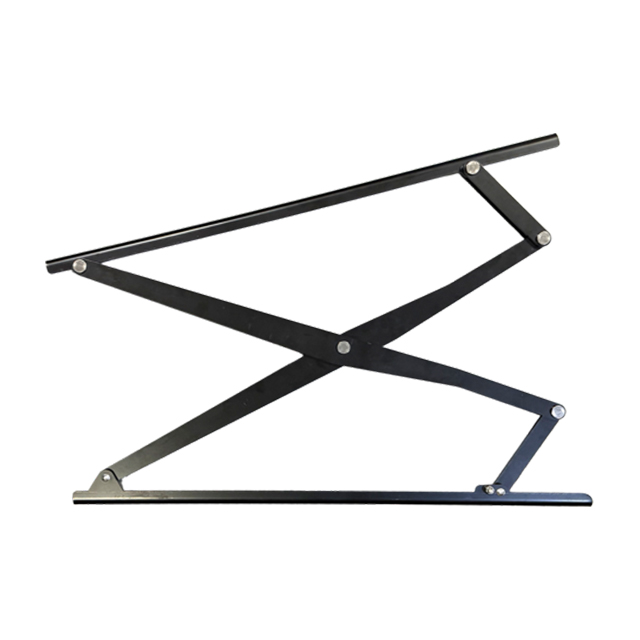
Taking a concept from a digital screen to a physical, fully functional roof requires a strict workflow. Skipping steps here usually results in expensive re-tooling later. Engineering teams must follow a precise sequence to guarantee success.
Step 1: 3D Scanning and Digital Twin Creation. Start by utilizing precise vehicle CAD data. If OEM CAD is unavailable, perform high-resolution 3D laser scanning on the physical van. Map exact roof curvatures down to the millimeter. Identify critical rib placements. Trace all OEM wiring paths to avoid cutting active electrical lines. Creating an accurate digital twin ensures perfect fitment later.
Step 2: Material Selection Framework. Separate the material selection into two distinct categories: shell construction and textile integration.
Shell Construction: Evaluate vacuum-infused fiberglass against aluminum fabrication. Vacuum-infused fiberglass yields a lighter shell. It also guarantees highly consistent material thickness across the entire roof. Aluminum fabrication works better for creating sharp, angular, expedition-style designs.
Textile Integration: Source premium marine-grade canvas. The fabric must be highly UV-resistant to prevent sun bleaching. It also needs dynamically breathable properties. Breathable textiles prevent excessive interior condensation and dangerous mold growth.
Step 3: Prototyping and Fitment Testing. This represents the most critical validation phase. You must test the first-off-tool RV Poptop Roof thoroughly. Drive the prototype vehicle at highway speeds to check for acoustic dampening and wind noise. Run the vehicle through high-pressure car washes to verify watertight seals. Finally, track actual factory installation times to ensure labor targets remain realistic.
Best Practice: Always test prototypes fully loaded. Mount the maximum allowed roof weight before driving the test vehicle. This reveals hidden stress points inside the fiberglass shell.
Transitioning from one successful prototype to ordering dozens of units monthly introduces entirely new operational challenges. Quality degradation often occurs when factories scale up too quickly. You must address these bottlenecks head-on.
Identify where delays occur on your factory floor. Do workers spend too much time aligning hinges? If so, you need better alignment jigs from your supplier. Transitioning smoothly requires locking down your design. Once you approve the final prototype, strictly forbid mid-production design changes. Even minor modifications disrupt the supply chain heavily.
Ensure every latch, seal, and bolt comes from reliable, long-term suppliers. Component standardization prevents massive headaches later. If a supplier swaps a latch model unannounced, it ruins your pre-cut fiberglass molds. Build rigid purchasing contracts guaranteeing part consistency for at least two years. Standardize the fabric cutting process using automated CNC laser cutters to prevent size variations.
You cannot rely on simple visual inspections during bulk production. Implement robust, standardized testing protocols on the factory floor.
Water-Ingress Testing: Install high-pressure spray booths at the end of the assembly line. Blast every completed roof from multiple angles to simulate hurricane-force rain.
Mold Tolerance Checks: Perform daily laser-guided tolerance checks on fiberglass molds. This ensures zero warping occurs during batch curing processes. Thermal expansion easily warps molds if factory temperatures fluctuate.
Hardware Torque Audits: Randomly audit the torque settings on all pre-installed hinge bolts before shipping.
Freight costs quickly destroy margins on large composite parts. Evaluate your shipping and logistics strategies carefully. Design the shell shape to allow tight nesting capabilities. Nesting lets you stack multiple roofs securely inside a single shipping crate. Maximize your freight density to keep landed costs manageable for bulk overseas orders. Work closely with logistics partners to design custom steel crating. Wooden crates often crush under heavy warehouse stacking.
Finding a factory capable of producing one great roof is easy. Finding a partner capable of producing five hundred identical roofs requires extensive due diligence. You must evaluate potential manufacturers systematically.
Organize your evaluation around three core pillars. Ask these exact questions during the vetting process.
Evaluation Matrix Structure
Evaluation Pillar | Key Questions to Ask | Red Flags to Watch For |
|---|---|---|
In-house vs. Outsourced | Does the partner manufacture the shell, stitch the canvas, and fabricate the metal hinges under one roof? | They heavily rely on third-party sub-contractors for critical moving parts. |
Engineering Support | Do they offer active CAD refinement? Do they provide installation SOP documentation for your factory floor? | They refuse to share CAD files or provide generic, unhelpful installation manuals. |
IP Protection | Will they sign clear agreements ensuring your custom roof design remains proprietary? | They currently sell identical products directly to your closest competitors. |
Partners assembling disparate parts from random sub-contractors struggle with quality control. A vertically integrated manufacturer controls their entire process. They adapt faster to your specific engineering requests. Furthermore, proper SOP documentation reduces costly installation errors in your facility.
Once you identify a promising vendor, initiate the formal engagement process. Request a comprehensive technical consultation immediately. Submit a strict Non-Disclosure Agreement (NDA) before sharing your vehicle CAD files. Finally, audit the supplier's past production volume. Request anonymized data showing their historical warranty claim rates. A confident manufacturer shares this data willingly.
Moving from basic vehicle drawings to bulk poptop production requires navigating a highly complex engineering transition. Success requires treating the roof not as an aftermarket accessory, but as a core structural extension of the base vehicle. By demanding rigorous quality control and precise material standards, you protect your brand from massive liabilities down the road.
Prioritize manufacturers who lead with engineering transparency and scalable QA processes over those offering the absolute lowest initial prototype cost.
Lock down your digital twin and CAD models early to prevent assembly line modifications.
Always demand verifiable 10,000+ cycle testing on any lifting mechanism you choose.
Design your supply chain logistics around dense nesting to minimize freight overhead.
A: Standard industry B2B MOQs typically range from 20 to 50 units per initial order. Custom tooling for fiberglass molds requires significant upfront investment. Manufacturers use these MOQs to properly amortize tooling costs across the first production batch, keeping per-unit pricing reasonable.
A: Provide a realistic timeline of 12 to 20 weeks. This window accounts for initial 3D scanning, tooling creation, first-article prototyping, physical revisions, and eventual final batch delivery. Complex motorized systems usually add an extra two weeks for rigorous electrical testing.
A: Yes. Strict safety compliances mandate manual overrides for all automated systems. Quality actuators feature accessible mechanical release pins. Pulling these pins instantly disengages the internal motor drive, allowing the user to safely lower the roof using gravity and basic physical guidance.
A: Top-tier factories utilize automated CNC fabric cutting machines to guarantee identical textile dimensions. Installers then use standardized aluminum track-extrusion systems to mount the canvas. This extrusion method locks the fabric into place evenly, eliminating the varied tension issues common with manual screw-and-washer installations.


