


No.36, Fada Road, Taicang, Jiangsu
Views: 0 Author: Site Editor Publish Time: 2026-08-10 Origin: Site


Overlanding subjects your rig to punishing washboard roads, extreme weather shifts, and continuous mechanical vibration. Traditional static roofs or standard commercial membranes simply fail under these severe operational demands. They quickly fracture, leak, and tear when pushed beyond perfectly paved highways. Because of this harsh reality, we must view an RV Poptop Roof for Overland Trailers not merely as a space-saving luxury. It functions as a critical structural component. It dictates the entire environmental envelope of your trailer while actively defending your interior living space.
This article provides a strictly technical, hype-free evaluation framework. You will learn exactly how to assess hard-shell materials, heavy-duty lifting hardware, and reliable sealing mechanisms. We help you understand these engineering fundamentals deeply. By mastering these concepts, you can confidently evaluate different poptop systems before making a significant off-grid vehicle investment.
Overland-grade poptop roofs require rigid, torsion-resistant materials (like aluminum or reinforced fiberglass) rather than standard commercial RV membranes (TPO/EPDM).
The viability of a poptop hinges heavily on its hardware; specifying an IP67 Waterproof Vertical Lifting Mechanism for RVs prevents actuator failure from dust ingress and water exposure.
True dust protection requires automotive-grade bulb seals and, in many cases, positive pressure management, rather than simple foam compression gaskets.
Added roof weight (solar arrays, cargo) fundamentally alters the center of gravity and dictates the required dynamic load rating of the lifting struts.
Off-grid travel introduces extreme physical forces to your vehicle chassis. When traversing rugged trails, articulating frames twist aggressively over uneven terrain. This diagonal flexing creates immense torsional stress across the entire trailer body. Standard rigid roof seals cannot absorb this twisting motion. They crack under the pressure, exposing your cabin to the elements. Furthermore, cheap poptop hinges easily misalign when subjected to these diagonal forces. You suddenly lose your weatherproof barrier simply because the hardware cannot handle off-camber trails.
Beyond physical frame stress, off-road towing introduces complex aerodynamic challenges. Towed trailers naturally create a low-pressure zone inside the cabin on dirt roads. This vacuum effect aggressively pulls ultra-fine silt through inferior roof-to-wall gaskets. Simple foam compression seals cannot stop this microscopic particulate matter. Fine desert dust effortlessly bypasses standard weatherstripping, coating your interior gear in hours. You need specialized sealing systems to counteract this aggressive vacuum effect entirely.
Finally, environmental exposure destroys standard materials rapidly. Continuous UV radiation breaks down rubberized RV roofs without mercy. TPO and EPDM membranes turn chalky, brittle, and prone to tearing. Flat poptop surfaces also risk dangerous water pooling during heavy storms. Standing moisture speeds up material degradation exponentially. It drastically increases the chance of catastrophic leaks penetrating your bedding area. You must select materials engineered specifically for constant, brutal outdoor exposure.
Fiberglass composite offers a brilliant strength-to-weight ratio. It provides excellent thermal break properties to keep your interior comfortable. However, you must carefully specify premium marine-grade gel coats. Standard RV gel coats chalk heavily and degrade under intense UV light. You need UV-stabilized finishes to ensure long-term structural integrity.
Aluminum fabrication provides unmatched durability for aggressive trail use. It offers massive rack-mounting capacity for heavy gear. Overlanders often prefer aluminum for its sheer impact resistance. But aluminum transfers ambient heat and cold rapidly. It absolutely requires robust internal insulation layers. You must insulate it properly to prevent overnight condensation and eliminate energy-draining thermal bridging.
Material Type | Primary Advantage | Main Disadvantage | Best Use Case |
|---|---|---|---|
Fiberglass Composite | Excellent thermal insulation | Susceptible to UV chalking | Extreme temperature fluctuations |
Aluminum Fabrication | High dynamic load capacity | Severe thermal bridging risks | Carrying heavy rooftop gear |
Soft-wall materials dictate your comfort during bad weather. We must evaluate fabric density using specific Denier ratings. A 400D or 600D fabric resists tearing from stray branches effectively. We also measure waterproof thresholds via hydrostatic head ratings. You want a rating of at least 3000mm to survive torrential, blowing rain without soaking through.
Material composition forces a choice between breathability and absolute waterproofing. Poly-cotton blends breathe exceptionally well. They manage internal condensation naturally by letting moist air escape. PVC-coated synthetics completely block outside water. However, they trap your breath inside, creating damp interior walls overnight. High-quality zippers, heavy-duty midge-proof bug mesh, and deep storm flap overlaps remain non-negotiable details for any serious soft-wall design.
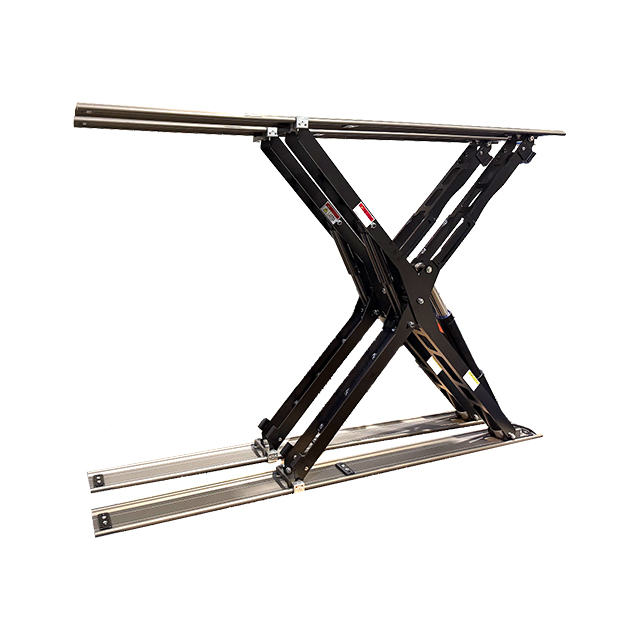
Actuators handle the heaviest physical labor of your camp setup. You must understand environmental protection ratings clearly. The "6" in IP67 means complete, absolute protection against dust penetration over extended time periods. The "7" guarantees protection against temporary water immersion up to one meter deep. This rating defines true off-grid survivability.
Standard linear actuators fail routinely in the backcountry. They short out instantly during deep river crossings. They seize up completely when fine desert sand penetrates their unsealed housings. You lose the ability to close your roof. This is exactly why you must specify an IP67 Waterproof Vertical Lifting Mechanism for RVs. It actively repels water and dust. It keeps your mechanical systems fully operational regardless of environmental punishment.
Rooftop payload calculations require precision. A fully loaded RV Poptop Roof often carries 200W+ solar panels, heavy recovery boards, or cargo boxes. You must calculate the exact dynamic lifting thrust required to raise this combined weight safely. Static load ratings mean nothing when the motors actually have to push 150 pounds upward.
You must choose between manual gas struts and 12V motorized actuators carefully. Gas struts operate simply and reliably. But they struggle to lift heavy, variable roof loads. Motorized actuators handle massive weight effortlessly. However, electrical systems carry inherent risks. You must demand manual mechanical overrides. Redundancy remains vital in case you suffer total off-grid electrical failure.
Gasket quality separates premium builds from frustrating failures. Dual-extrusion EPDM rubber bulb seals vastly outperform standard adhesive foam tape. EPDM resists UV degradation and ozone cracking naturally. These bulb seals compress effectively around uneven surfaces. They retain their memory shape for years. They maintain a completely airtight barrier against aggressive silt and highway driving rain.
Latches secure the entire structural envelope during transit. Adjustable, lockable over-center compression latches are strictly necessary. They let you manually increase closing tension. Trailer frames flex and settle over thousands of miles. Seals gradually compress. Over-center latches ensure you always maintain perfect seal integrity despite these inevitable structural changes over time.
Canvas management during pack-down demands careful engineering. Closing a wet roof often ruins your bedding. High-end poptop systems incorporate specialized exterior drip rails. They also utilize strategic fabric folding mechanisms. These clever designs pull the wet canvas outward or isolate it inside waterproof channels. They completely prevent damp fabric from wicking moisture onto your expensive interior mattresses.
Modifying an existing trailer requires serious structural calculation. Retrofitting a poptop onto a trailer not originally framed for an interrupted roofline poses immense risks. You remove the solid roof, which acts as a primary structural shear panel. This loss of shear strength allows the walls to flex independently. The entire trailer body can buckle on rough trails without added heavy steel reinforcement hoops.
Weight placement fundamentally changes how your vehicle handles. A robust roof mechanism easily adds 150 pounds to the highest point of your rig. This severe center of gravity shift alters towing dynamics completely. It increases dangerous highway sway risk significantly. It also dramatically reduces off-camber trail stability, making rollover scenarios much more likely.
Routine maintenance ensures your expensive hardware survives years of abuse. You cannot ignore basic upkeep on moving parts.
Apply dry PTFE lubricants to all actuator arms and hinges. Dry lubes refuse to attract abrasive dust and sand.
Execute strict UV re-treatment protocols for soft-wall fabrics and gel coats every six months.
Perform annual seal compression testing using the paper-pull method to find hidden air gaps.
Inspect internal electrical wiring harnesses for chafing near pinch points.
Evaluating manufacturers requires deep skepticism of marketing brochures. You must look far past glossy photos. Evaluate the manufacturer's warranty documents specifically. Check their actual coverage on moving parts and lifting hardware. Many companies warrant the structural box for ten years but only cover the crucial lifting actuators for twelve months.
You must interrogate the builder before placing any deposit. Ask direct, uncompromising technical questions.
"What is the exact dynamic versus static load rating of the lifting struts?"
"Are the lifting mechanisms fully certified to IP67 standards, or merely 'weather resistant'?"
"What is the exact mechanical protocol for closing the roof if an electric actuator completely fails in the field?"
"What specific Denier and hydrostatic head rating does your canvas utilize?"
Align your trailer footprint, payload capacity, and budget carefully. Do not buy a 200-pound motorized poptop if your single-axle trailer only has 400 pounds of total remaining payload capacity. Select the right system architecture that respects your towing vehicle's limits.
An overland poptop roof operates as an active mechanical system. It is never just a passive shelter. Its ultimate value relies entirely on the precise quality of its rubber seals, breathable canvas, and heavy-duty lifting hardware. Properly specified materials protect your chassis and keep your interior pristine.
A brilliantly engineered system heavily reduces setup friction at camp. It provides truly resilient shelter during violent storms. Conversely, cutting corners on waterproofing or ignoring actuator IP ratings inevitably leads to miserable off-grid failures. Mechanical breakdowns ruin trips quickly.
We strongly encourage you to audit your trailer's payload and electrical capacity immediately. Do this math before consulting with a certified fabricator or ordering a premium poptop kit. Preparation ensures your rig handles the upgrade safely.
A: Yes, provided your linear actuators meet the required dynamic load rating. Exceeding this exact rating causes immediate strut burnout or unsafe uneven lifting. Always calculate the total weight of your solar arrays and gear before specifying the lifting struts. Dynamic load dictates what the motor can actively lift, not just passively hold.
A: An IP67 rating completely guarantees moisture exclusion. This strictly prevents internal ice expansion from destroying the motor. However, the viscosity of internal factory lubricants must be specifically rated for sub-zero temperatures. This ensures the motor doesn't overdraw amps when cold. Always confirm the operating temperature range with the manufacturer.
A: High-quality, UV-treated poly-cotton canvas typically lasts seven to ten years before requiring any significant re-waterproofing. To achieve this lifespan, you must ensure it is never folded or stored while damp. Proper drying prevents rapid mildew degradation and seam rot. Regular application of UV protectants extends fabric life significantly.


