


No.36, Fada Road, Taicang, Jiangsu
Views: 0 Author: Site Editor Publish Time: 2026-08-24 Origin: Site


The roof represents the most mechanically stressed component of any pop-up camper design. You raise and lower it constantly, exposing complex moving parts to harsh elements. When failure occurs in the field, it immediately causes severe water ingress, security vulnerabilities, and ruined camping trips. Arbitrary marketing claims about durability simply fall short when you face severe weather far from a service center. Rigorous cycle testing—specifically exceeding 10,000 actuations—serves as the only objective baseline for measuring true component endurance. This technical evaluation framework helps buyers and fleet managers assess actual engineered quality. You will learn exactly how to separate proven OEM solutions from unverified aftermarket builds. We will explore mechanism types, material fatigue limitations, and the critical gap between laboratory simulations and real-world off-grid conditions.
A 10,000-cycle test simulates roughly 10 to 15 years of aggressive, real-world use under varying load conditions.
The reliability of any RV poptop roof hinges primarily on the geometry and load capacity of its specific pop up roof mechanism (struts, scissor lifts, or actuators).
Lab testing does not account for user-introduced variables like debris in the tracks or uneven weight distribution; preventive maintenance remains non-negotiable.
Buyers should demand transparent load ratings, cycle test documentation, and warranty coverage that explicitly addresses mechanical fatigue.
Manufacturers often throw around impressive numbers, but you need to know exactly what those numbers mean. In rigorous OEM testing, a single "cycle" defines one complete opening and closing sequence. The sequence begins from a fully secured, latched position. The system pushes the roof upward to its maximum designed extension. It holds this tension briefly before retracting downward until the perimeter seals compress completely. Finally, the test apparatus engages the latches again. This entire loop constitutes just one cycle. Passing a 10,000-cycle threshold demonstrates massive mechanical endurance.
You can translate these 10,000 cycles into practical field longevity. Imagine you camp aggressively and actuate the roof twice a day. Opening it in the morning and closing it at night equals two cycles daily. If you spend 100 days a year on the road, you consume 200 cycles annually. At this high-use rate, 10,000 cycles map out to 50 years of hardware capability. Even for full-time travelers who actuate the roof twice every single day, a 10,000-cycle rating represents over 13 years of flawless operation before expected failure.
Legitimate testing never happens in an empty, climate-controlled vacuum. Engineers apply severe variables to replicate bad days in the wild. They load the roof with simulated snow weights and heavy rack accessories like solar panels and kayaks. Furthermore, they conduct these cycles inside environmental chambers. They drop the temperature below freezing to test strut seal brittleness and hydraulic fluid viscosity. Then they crank the heat to 120°F to monitor motor strain and fabric stretching. This dynamic testing separates verified engineering from basic garage builds.
Usage Frequency | Cycles Per Year | Years to Reach 10,000 Cycles |
|---|---|---|
Weekend Warrior (30 days/year, 2 cycles/day) | 60 | 166 Years |
Heavy Traveler (100 days/year, 2 cycles/day) | 200 | 50 Years |
Full-Time Nomads (365 days/year, 2 cycles/day) | 730 | 13.7 Years |
The structural foundation of your camper relies entirely on the lifting hardware. When evaluating an OEM build, you must scrutinize the primary lifting architecture. Industry leaders generally utilize one of three primary mechanism types. Each system dictates specific limits on payload capacity and long-term mechanical reliability. Let us break down these core categories.
This approach remains the most common design across lightweight builds. The system utilizes rear-mounted hinges combined with heavy-duty pneumatic gas struts. It operates efficiently and requires minimal parts, making it highly reliable in moderate conditions. However, gas struts respond poorly to extreme temperature fluctuations. The internal gas pressure drops in freezing weather, heavily reducing lifting assistance. Over years of use, the internal seals wear out, causing permanent pressure loss and leading to roof sag. They work best for lighter roofs without heavy solar arrays.
Scissor lift systems offer superior lateral stability. They feature crisscrossing metal frameworks on hinges that push the roof straight upward. This provides uniform lift and creates equal headroom across the entire footprint. If you plan to load the roof with gear, this Pop Up Roof Mechanism provides the rigid support you need. The geometry handles heavy vertical loads effortlessly. The trade-off involves track maintenance. The lower sliding bearings require precise alignment and frequent clearing of debris to prevent binding during actuation.
Modern premium builds often feature 12-volt electric linear actuators. These motorized rams provide push-button convenience and establish exact, repeatable limit switches. You never have to muscle a heavy, snow-covered roof upward. Unfortunately, this convenience introduces new failure points. You must manage complex wiring harnesses, relays, and motor ingress protection (IP ratings). If a motor burns out while the camper is open, you face a serious problem. You must ensure the system includes an accessible, single-person manual override.
Best Practices for Mechanism Evaluation:
Always match the mechanism type to your intended roof payload.
Avoid gas struts if you regularly travel in sub-zero environments.
Inspect the track tolerances on scissor lifts before taking delivery.
Test the manual override on electric systems yourself before buying.
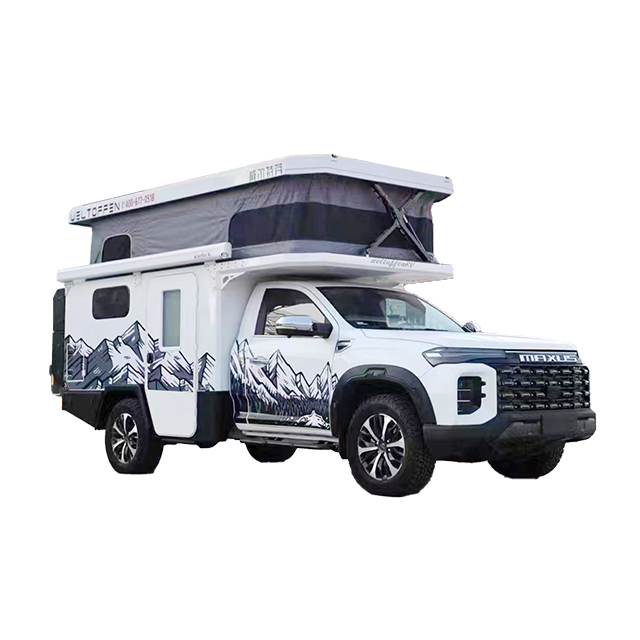
While heavy metal components capture the most attention, the soft goods usually fail first. Metal hardware might survive 10,000 cycles, but fabric and rubber degrade at a completely different rate. You must evaluate these softer materials just as rigorously as the metal framework. Implementation realities often expose serious weaknesses in canvas tension and seal compression.
The fabric sides endure massive stress every time the roof extends. During the final inches of the lift cycle, the mechanism pulls the canvas drum-tight. This tensioning phase stresses the stitched seams aggressively. OEM testing measures how these seams handle repeated stretching. Furthermore, you must consider UV degradation and hydrostatic head ratings. Sun exposure bakes the fabric, making it brittle. High hydrostatic head ratings (measuring waterproofing durability) eventually drop as the factory coatings wear away from continuous folding and unfolding.
Waterproofing relies entirely on the perimeter seals. Most builders use automotive-grade EPDM rubber seals. When you latch the roof closed, it crushes this rubber to block out moisture. Over thousands of cycles and years of temperature swings, EPDM suffers from a phenomenon called "compression set." The rubber essentially loses its memory. It stays permanently flattened and fails to rebound when you open the roof. Once compression set occurs, wind-driven rain will easily bypass the flattened rubber during transit.
Lab testing also focuses heavily on metal fatigue at specific pivot points. When you deploy the camper in high winds, the lifted surface acts like a giant sail. The wind applies brutal lateral forces to the hinges and lift arms. OEM cycle tests simulate these side loads to measure pivot-point shearing. Without thick, reinforced hinge plates and high-tensile hardware, the continuous side-to-side rocking will eventually shear the mounting bolts directly out of the camper body.
We must acknowledge the fundamental limits of factory testing. Engineers design pristine testing environments. They run cycles continuously without pausing for environmental contamination. When you take an RV Poptop Roof into the wild, it faces completely different threats. A laboratory does not replicate blowing abrasive sand, corrosive salt air, or sticky pine needles falling into the tracks. Factory tests validate baseline mechanical endurance, but they cannot predict how user environments will degrade the hardware over time.
Many premature failures result from user-introduced variables rather than pure mechanical defects. Asymmetric loading stands out as a primary culprit. If you mount heavy storage boxes entirely on the driver’s side of the roof, the lifting mechanism fights uneven weight distribution. This twists the scissor frames and blows out seals on the heavier side. Another frequent user error involves trapping canvas in the scissor mechanisms during closure. Pinching the fabric repeatedly creates micro-tears and binds the lifting arms, leading to catastrophic system failure.
Manufacturers attach hidden maintenance assumptions to their 10,000-cycle claims. They expect you to act as a diligent partner in longevity. If you want the system to survive, you must lubricate sliding tracks with dry PTFE spray regularly. You must clean the EPDM seals with UV-protectant conditioners to prevent cracking. You must also adjust latch tension periodically as the rubber naturally flattens. Failing to perform this basic maintenance voids the real-world value of any factory cycle testing.
Common Mistakes in the Field:
Storing the camper wet, causing mold to rot the canvas seams.
Using grease instead of dry silicone on tracks, which attracts abrasive dirt.
Ignoring uneven lifting speeds, which indicates strut failure.
Applying asymmetrical loads to the roof racks.
You need a strict, evidence-based framework when making your final evaluation. It is easy to fall for sleek aesthetics and aggressive marketing campaigns. However, specifying a reliable system requires demanding hard data from the builder. Use this strategic logic to shortlist manufacturers and protect your investment.
Data Validation: Never accept vague claims of "heavy-duty" construction. Ask the manufacturer to publish their cycle testing parameters. You want to see the exact weight applied during the test and the temperature ranges used. If they cannot provide a basic engineering report, they likely skip formal testing altogether.
Component Sourcing: The lifting hardware dictates reliability. Investigate where the builder sources their parts. Are the gas struts manufactured by reputable industrial brands, or are they generic, unbranded imports? High-quality components feature part numbers and clear pressure ratings stamped directly on the metal housing.
Manual Override Verification: If you select an electric motorized system, demand a demonstration of the mechanical override. Ask yourself if a single person can realistically lower the roof if the motors die in the middle of nowhere. A good RV Poptop Roof always includes a simple tool or release valve to bypass electrical failures safely.
Warranty Realities: Read the fine print on the warranty coverage carefully. Does the document cover the mechanical lifting hardware and the soft canvas separately? Many companies offer long warranties on the fiberglass shell but severely restrict coverage on the moving parts and seals. Look for clear clauses that address mechanical fatigue and strut depressurization.
Your next step requires direct action. Contact your shortlisted manufacturers. Request their technical specification sheets, their recommended maintenance schedules, and their official warranty documents. Compare their hardware sourcing directly against this evaluation framework before you commit to a build.
A proven 10,000-cycle test establishes a mandatory baseline for OEM quality. It proves the engineering team did their homework, calculating payload limits, metal fatigue, and fabric tension accurately. However, testing in a pristine laboratory only solves half the equation. Actual longevity relies heavily on the partnership between engineered durability and your commitment to preventative maintenance. You must keep the tracks clean, condition the seals, and respect the symmetrical load limits of the mechanism.
Do not leave your off-grid security to chance. Consult with certified upfitters or direct OEM representatives to discuss your specific travel style. Match your required roof payload and environmental conditions directly to the right mechanism type. Demand transparency, review the cycle test data, and secure a system built to outlast your wildest adventures.
A: Environmental factors and frequency of use heavily dictate strut lifespan. Constant exposure to extreme cold or intense heat degrades internal seals rapidly. You will notice signs of failure when the roof sags, drops unexpectedly, or lifts unevenly. Under normal conditions with regular camping use, a standard gas strut lasts between 5 and 7 years before requiring re-gassing or complete replacement.
A: Yes, but you must respect the system's dynamic weight limits. Adding heavy accessories permanently changes the upward force required to open the camper. If you add significant weight, you will likely need to upgrade to higher-pressure gas struts or more powerful linear actuators. Failing to upgrade the lifting hardware causes premature wear and eventual mechanism failure.
A: User error causes far more issues than pure mechanical defects. The most frequent failures stem from asymmetric loading, where owners place heavy gear on only one side. Other common causes include pinching the canvas in the hinges during closure, forcing the roof down over obstructions, and neglecting basic seal lubrication.
A: No. Cycle testing strictly proves mechanical endurance and hinge durability. Weatherproofing relies entirely on your maintenance routine. To prevent leaks, you must continuously condition the EPDM rubber seals to fight compression set. You must also reapply waterproofing treatments to the canvas to maintain the fabric's hydrostatic head rating over time.


