


No.36, Fada Road, Taicang, Jiangsu
Views: 0 Author: Site Editor Publish Time: 2026-05-15 Origin: Site


Every van conversion eventually hits the same frustrating roadblock. You must balance the absolute necessity of comfortable living space alongside strict requirements for aerodynamics, stealth, and garageability. Choosing to permanently cut open your vehicle's factory roof represents one of the most critical, high-stakes investments you will make during a build. This permanent modification directly impacts your rig's structural integrity, daily driving dynamics, and ultimate resale value.
Making the wrong structural cut or selecting an underpowered lift mechanism can quickly ruin an otherwise perfect camper. The purpose of this guide is to move beyond basic visual aesthetics. We will help you evaluate an RV Poptop Roof strictly based on hard engineering constraints, precise load capabilities, and true structural fitment. By understanding these technical variables, you can confidently build a camper van combining standard-roof agility with high-roof interior comfort.
Dynamic vs. Static Load is Non-Negotiable: Total roof load must account for solar panels, gear, and weather accumulation, requiring a safety factor of 1.5x to 2.0x for lifting mechanisms.
Mechanism Selection Dictates Layout: A waterproof vertical lifting mechanism for RVs provides full-length standing room, while hinged variants limit peak height to specific kitchen or bed layouts.
Weatherproofing Requires Certifications: Look for an IP67 RV poptop roof rating for actuators and seals to ensure protection against high-pressure washing and storm-force conditions.
Hidden Costs are Standard: Budget for 15-20% above the kit price to cover color-matching, structural reinforcement, dynamic wiring setups, and insurance premiums.
The most immediate constraint for any van owner involves everyday parking. Fixed high-roof vans frequently exceed 9 feet in overall height. This massive profile instantly restricts access to standard 7-foot residential garage doors. It also prevents you from entering multi-level city parking structures. Furthermore, towering camper vans often trigger immediate Homeowner Association (HOA) violations if parked in residential driveways.
Conversely, a retracted poptop profile closely mimics a standard cargo or passenger van. This lower clearance allows you to park almost anywhere safely. It provides a significant stealth advantage for urban overnighting. You blend into standard parking lots effortlessly. Passersby usually mistake the vehicle for a simple work van rather than a fully equipped mobile home.
Modifying your roof system typically adds between 150 and 400 lbs to the vehicle. However, a collapsible roof keeps this added mass positioned incredibly low during transit. Keeping the weight closer to the chassis yields tremendous driving benefits. You experience significantly reduced vulnerability to sudden highway crosswinds. The streamlined profile reduces drag, leading to noticeably lower fuel consumption on long road trips.
If you plan to take your van off-road, the low center of gravity prevents the top-heavy swaying common in fixed high roofs. You maintain better trail clearance under low-hanging tree branches. You navigate steep inclines without feeling like the vehicle might tip over.
We must honestly address the thermal limitations inherent in soft-shell materials. Traditional canvas sides offer incredible breathability during hot summer months. They let natural breezes flow straight through the cabin. However, these materials bleed heat rapidly in sub-zero temperatures. Insulated fiberglass hard shells perform much better in retaining warmth.
If you plan on aggressive winter camping, you must adapt your build strategy. A robust diesel heating system becomes an absolute requirement to offset the thermal loss of the tent fabric. You will also need quilted thermal liners to snap against the canvas walls. While cold-weather camping is possible, it requires significantly more energy preparation than an insulated fixed roof.
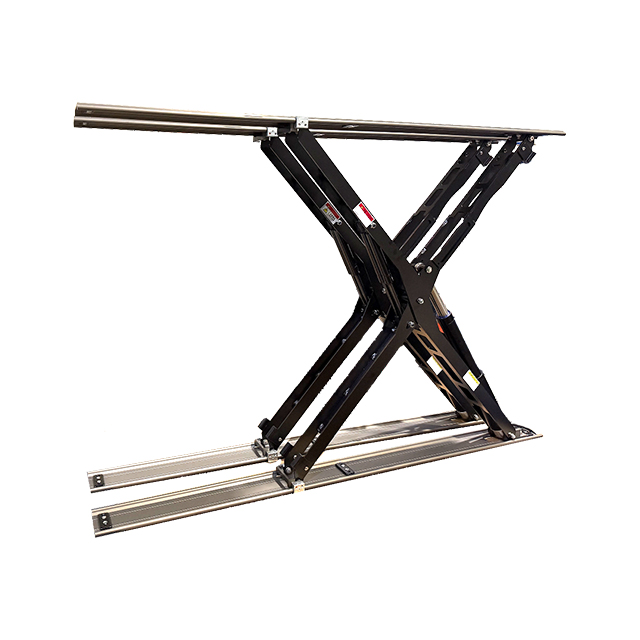
Your choice of lifting geometry completely dictates your interior floor plan. Hinged systems pivot from either the front or the rear. They rely on basic lever physics to operate. Because of the leverage angle, the thrust requirements from the motor reach their absolute peak when the roof sits fully closed. Hinged variants only provide maximum head clearance at one end of the van. Therefore, they work best for targeted standing zones, such as a dedicated rear kitchen or a rear shower setup.
Alternatively, vertical lift designs raise the entire roof platform straight up. Upgrading to a Waterproof Vertical Lifting Mechanism for RVs distributes the heavy structural load equally across all four corners of the van. This balanced approach maximizes full-cabin standing height. You gain unrestricted mobility from the driver's seat all the way to the rear doors.
Engineers and DIY builders frequently encounter the same mechanical pitfall during installation. They select powerful lifting actuators but ignore the closed-length constraint. When fully retracted, the motor assembly might simply be too long for the van's internal structural cavity. If the closed actuator exceeds the available mounting space, it will protrude into your living area or prevent the roof from locking properly.
Common Mistake: Failing to measure the distance between the upper and lower mounting brackets when the roof is fully compressed. Always verify the actuator's exact retracted dimensions before purchasing.
Multi-actuator setups demand absolute mechanical precision. Whether you employ a dual-actuator hinged system or a quad-actuator vertical lift, you must install a dedicated synchronization controller. Even identical motors spinning at the exact same voltage will eventually drift in speed due to varying friction or uneven roof loads.
A synchronization controller actively monitors the position of every actuator. It adjusts the speed dynamically to keep the lifting platform perfectly level. Without this critical safety redundancy, one side of the roof will rise faster than the other. This imbalance causes severe twisting. It will inevitably bind the hinges, burn out the motors, or trigger catastrophic frame failure during deployment.
Understanding weight ratings prevents dangerous structural failures. You must clearly distinguish between static and dynamic load limits. Static load represents the absolute maximum weight the roof can support while the vehicle remains parked and fully deployed. This rating determines how many sleeping occupants the upper bed platform can safely hold.
Dynamic load dictates what you can safely mount on top of the roof while driving and operating the lift mechanism. This includes your solar arrays, roof boxes, recovery gear, and heavy snow accumulation. Exceeding the dynamic limit guarantees motor failure.
Specification Type | Vehicle State | Primary Function | Typical Weight Range |
|---|---|---|---|
Static Load Limit | Parked & Deployed | Supports sleeping occupants and interior bedding. | 400 lbs – 600 lbs |
Dynamic Load Limit | In Motion & Lifting | Supports solar panels, cargo boxes, and external gear. | 100 lbs – 200 lbs |
You should never guess your vehicle's payload thresholds. Professional builders reference the Recreational Vehicle Industry Association (RVIA) guidelines to ensure structural safety. RVIA standard practices typically recommend total top-load limits hovering between 400 and 800 lbs, depending strictly on the base chassis strength. Pushing beyond these guidelines drastically alters the vehicle's braking distance and rollover resistance.
To choose the correct lifting motors, use a transparent evaluation metric. Never buy components based purely on estimated gear weight. You must calculate the exact force required to lift your specific build.
Use this standard sizing formula: (Total Roof Weight × 1.5 Safety Factor) ÷ Number of Actuators
If your combined fiberglass shell and solar panels weigh 200 lbs, you multiply by a 1.5 safety factor to get 300 lbs. Dividing this among two actuators means each motor must comfortably push at least 150 lbs of force. This safety factor accounts for unexpected variables like heavy rainwater accumulation, stiff hinges, and strong headwinds opposing the lift.
Ignoring these math formulas invites disaster. Pushing past your dynamic payload limits places extreme stress on the hinge rivets. It forces the electric motors to draw excessive amperage, eventually melting the internal wiring harnesses. Worse, a heavy, overloaded top flexes unevenly when closed. This flexing misaligns the rubber weather seals, allowing heavy rain to pour directly into your bedding area.
Your choice of exterior material dictates your maintenance schedule for the next decade. Hard-shell roofs utilize Glass Reinforced Plastic (GRP), fiberglass, or stamped aluminum. These rigid materials provide genuine four-season durability. They withstand heavy hail, resist UV degradation effortlessly, and easily support rigid solar panels.
Conversely, soft-shell canvas materials prioritize breathability and lightweight construction. While modern marine-grade fabrics resist mold incredibly well, they suffer from UV breakdown over time. Expect a much shorter lifespan for soft fabrics. You will likely need to replace the canvas entirely every 8 to 12 years to maintain proper weatherproofing.
Moisture is the primary enemy of any van conversion. This is exactly why securing an IP67 RV Poptop Roof rating matters so much for your lifting hardware. The lifting actuators, synchronization modules, and exterior wiring connections sit fully exposed to the elements. An IP67 certification guarantees these sensitive electronic components remain completely dust-tight and can survive temporary submersion in water.
Best Practice: Never settle for lower IP ratings on exterior mechanics. An IP67 system ensures your actuators endure punishing highway rainstorms and automated high-pressure car washes without short-circuiting.
Mounting solar panels onto an elevating platform introduces complex electrical challenges. You cannot route standard household cables onto a moving part. You must use flexible, marine-grade solar wiring designed for continuous mechanical bending.
Furthermore, builders must incorporate physical "drip loops" at the main hinge points. A drip loop is a deliberate, U-shaped sag in the wire just before it enters the vehicle body. Gravity forces rainwater to drip off the bottom of the loop instead of wicking down the cable straight into the cabin. Always pair these loops alongside waterproof quick-disconnect ports. This allows you to easily unplug the solar panels if the roof requires structural maintenance later.
Vans come in various lengths, and your chassis dimensions dictate the entire installation approach. The vehicle's wheelbase—whether Short Wheelbase (SWB) or Long Wheelbase (LWB)—directly controls the canvas footprint. A longer wheelbase provides a massive upper sleeping area but demands a much heavier, longer reinforcement frame to prevent the body from sagging.
We must discuss the brutal reality of cutting your vehicle. Factory vans rely on horizontal steel roof bows to maintain their structural rigidity. Removing these bows severely compromises the vehicle’s crush resistance. You cannot simply chop a hole in the ceiling and bolt a tent over it.
To safely restore this lost strength, you must install an engineered, heavily bonded steel reinforcement frame around the newly cut perimeter. Ensuring Federal Motor Vehicle Safety Standards (FMVSS) compliance is critical here. A properly engineered frame protects the occupants during a catastrophic rollover event.
Before purchasing hardware, you must understand the financial reality of this upgrade. The advertised price of a lift kit rarely covers the final completed cost.
Supply Only (DIY): Buying a raw kit saves money upfront but carries immense danger. Attempting a DIY RV Poptop Roof installation risks ruining the vehicle entirely. A single crooked cut can total the van.
Supply & Install (Professional): Hiring certified technicians guarantees structural safety and warranty coverage. However, professional installation typically removes your van from the road for 2 to 6 days. Furthermore, highly reputable shops often maintain waitlists stretching anywhere from 2 to 12 weeks.
Hidden Costs: Always budget an extra 15% to 20% above the initial quote. You will likely face additional charges for exterior paint color-matching, custom interior headliner trimming, dynamic electrical integration, and mandatory increases in your auto insurance premiums.
Choosing the correct elevating roof system fundamentally defines your van conversion experience. You should base this massive decision on your daily parking constraints, your primary camping climates, and your precise load requirements, rather than just visual appeal. A well-engineered lift grants you the aerodynamic stealth of a cargo van alongside the luxurious standing height of a fixed-roof motorhome.
Before making your final purchase, always verify the dynamic load limits and demand IP-rated weatherproofing for all external electronic components. Protect your investment by prioritizing structural safety over cheap hardware.
Take these actionable next steps to move your project forward:
Measure your specific van chassis internally to identify your exact closed-length constraints.
Map out the combined total weight of your planned solar array, roof rack, and outdoor storage boxes.
Run the actuator sizing formula to determine your necessary lift capacity.
Consult an ISO-certified professional installer to schedule a comprehensive structural assessment of your vehicle.
A: Cutting the factory roof removes essential steel support bows, which temporarily weakens the vehicle. However, proper professional installation involves bonding a heavy-duty steel reinforcement frame around the interior perimeter. This engineered perimeter frame fully restores, and often exceeds, the van's original factory rigidity and rollover crush resistance.
A: Yes, but this capability strictly depends on your specific dynamic load rating and the mechanical lifting capacity of your actuators. If your loaded gear approaches the upper limit of the motors, you should manually unload heavy storage boxes before popping the roof to prevent hinge damage.
A: Quality mechanisms include manual override features allowing you to physically bleed the pressure and lower the roof. Sometimes, a software glitch causes the failure. You can often perform a "soft-reset" by pulling the main system fuse for ten minutes. This highlights the importance of utilizing synchronized dual-motor systems.
A: Soft-shell canvas alone provides very little thermal insulation against freezing temperatures. To comfortably use these systems in winter, you must invest in heavily insulated snap-in thermal liners. Additionally, running a secondary diesel cabin heater is strictly required for safe four-season camper van use.


